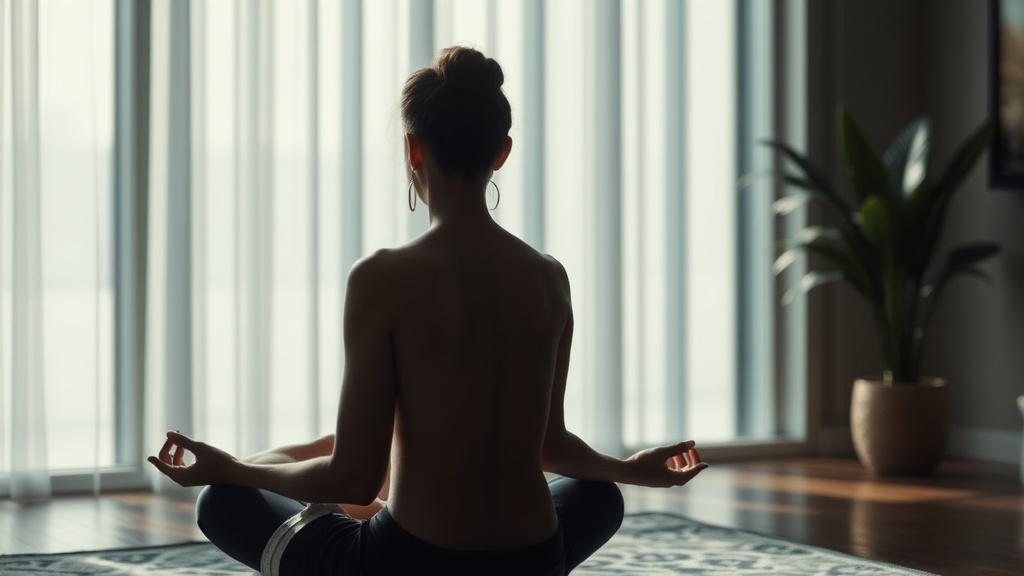
Can a Simple Body Scan Meditation Change Your Entire Day?

You're standing at the kitchen counter, coffee in hand, already mentally three meetings ahead. Your shoulders hover somewhere near your ears. Your jaw clenches without permission. Somewhere between the alarm and now, your body became background noise—just a vehicle to get through the to-do list. This post explores what happens when you reclaim those lost morning minutes for body scan meditation: a practice that asks nothing more than your attention, yet delivers a subtle but measurable shift in how you meet whatever comes next.
What Is Body Scan Meditation—and Why Do It Before 9 AM?
Body scan meditation is exactly what it sounds like: a guided or self-directed practice where you move your attention systematically through different parts of your body, noticing sensations without trying to change them. No special equipment needed. No app subscription required (though plenty exist if you want guidance). Just you, your breath, and about ten minutes of not being elsewhere.
The morning timing matters more than you might think. Research from Harvard Medical School shows that mindfulness practices can reduce rumination and stress reactivity—two things that tend to spike during morning transitions. When you scan your body before the day gains momentum, you're essentially performing a status check: Where am I holding tension? What's my energy actually like—not what I wish it were? This information becomes useful data, not background static.
Unlike seated meditation that focuses on a single anchor (the breath, a mantra), body scanning builds interoceptive awareness—your sense of what's happening inside. This matters because most of us operate on autopilot, pushing through fatigue or ignoring early warning signs of overwhelm. A morning scan interrupts that pattern. You're training yourself to notice before the crash.
How Do You Actually Do a Morning Body Scan?
The mechanics are simple, but the discipline lies in consistency. Here's a straightforward approach that works even if your mind races:
- Find your position. Lie flat on your back, arms slightly away from your body, palms up. If that's too tempting for sleep, sit upright in a chair with feet flat on the floor. The key is comfort without collapse.
- Set a timer. Start with five minutes if ten feels impossible. You're building a habit, not performing expertise.
- Begin at the top—or the bottom. Some practitioners start at the crown of the head and work down; others begin at the toes and move up. Neither is superior. Pick one and stay consistent for a week.
- Move slowly. Spend 30-60 seconds on each major body region: feet, legs, hips, stomach, chest, hands, arms, shoulders, neck, face. Notice temperature, pressure, tingling, heaviness—whatever's actually there.
- When your mind wanders (it will), return gently. No self-judgment required. The practice is the returning.
For those who prefer guidance, UCLA's Mindful Awareness Research Center offers free, no-login-required audio tracks ranging from three to nineteen minutes. The quality rivals paid apps, and there's no friction to getting started.
What Physical Sensations Should You Expect (and Not Expect)?
Here's where expectations often derail beginners. Body scanning isn't about achieving a specific state. You're not trying to relax—that's a common misconception that creates performance pressure. You're simply observing. Some mornings your shoulders might feel like concrete. Other days, you'll notice a lightness you hadn't registered. Both observations are equally valid.
That said, regular practitioners often report predictable patterns. Tension tends to pool in predictable locations: the jaw (especially for teeth grinders), the shoulders (the default stress storage), the lower back (hello, desk posture). Just noticing these patterns—without immediately trying to fix them—can paradoxically invite softening. The body responds to attention.
You might also experience what meditators call "subtle energies"—tingling, warmth, or a sense of spaciousness in previously tight areas. These sensations come and go. Don't chase them. The goal isn't sensation collection; it's relationship-building with your own physical self.
Why Does This Practice Work Better Than Just "Relaxing"?
It seems counterintuitive. Shouldn't lying still automatically make you calmer? Not necessarily. Passive rest without awareness often lets the mind spiral—rehearsing conversations, cataloging worries, planning dinner. Body scanning gives the mind a specific job: attend here, now, to this.
There's also a neurological explanation. Research published in the American Psychological Association's Monitor on Psychology suggests that mindfulness practices can reduce activity in the amygdala—the brain's alarm system—while strengthening connections to prefrontal regulation areas. Translation: you become less reactive to stressors not because life gets easier, but because your nervous system gains regulatory capacity.
The morning timing amplifies this effect. Your cortisol naturally peaks shortly after waking (it's called the cortisol awakening response). For anxious types, this can feel like morning dread—waking already wired. Body scanning during this window doesn't suppress the cortisol spike; it changes your relationship to the sensations it creates. You feel the alertness without the story about what it means.
Can Ten Minutes Really Change Anything?
Let's be realistic. A single body scan won't transform your life. But accumulated practice—weeks of consistent morning scanning—begins to rewire attention patterns. You'll notice your clenched jaw during a difficult email. You'll catch yourself holding your breath in traffic. These micro-awakenings accumulate into a different quality of presence.
The practice also builds a kind of embodied honesty. We spend so much of life overriding physical signals—pushing through fatigue, ignoring hunger, masking pain with caffeine. Morning scanning reverses this habit. You're essentially telling yourself: I notice you. I'm listening. That message, repeated daily, has cumulative effects on self-regard and decision-making.
Start tomorrow. No special preparation needed. Just ten minutes between waking and the first obligation, spent in systematic attention to the one vehicle you're guaranteed to occupy for your entire life. Notice what happens.